
 Español
 Portugues
 Pусский
 Français
 Deutsch
 日本語
日本語 한국어
한국어 العربية
 Italiano
 Nederlands
 Ελληνικά
 Polski
 ไทย
ไทย Tiếng Việt
 українська
 中文简体
中文简体

TCPP
TCPP, or Tri(2-chloroisopropyl) phosphate, is an organophosphorus compound widely used as a flame retardant and plasticizer. It appears as a clear to pale-yellow liquid and is valued for its ability to reduce flammability in a variety of materials. Chemically, it is a phosphate ester containing chlorine and organic groups, which contribute both to its fire-retardant behavior and its compatibility with polymers.One of the primary applications of TCPP is in rigid polyurethane foam, commonly used for insulation in construction, refrigeration, and industrial equipment. By incorporating TCPP into the foam formulation, manufacturers can improve fire resistance, helping materials meet building codes and safety standards. TCPP functions mainly in the condensed phase, promoting char formation and slowing the spread of flames, while the presence of chlorine can also provide some gas-phase flame inhibition.Beyond rigid foams, TCPP is also used in flexible polyurethane foams, coatings, adhesives, sealants, and some thermoplastics. In these materials, it can act both as a flame retardant and as a plasticizer, improving flexibility and processability. Its liquid form and good solubility in many organic systems make it relatively easy to blend with polymer formulations without significant changes to manufacturing processes.From a performance perspective, TCPP offers a balance of cost-effectiveness and flame-retardant efficiency. It has been favored in many regions because it helps products comply with fire safety regulations while maintaining acceptable mechanical and physical properties. In addition, its relatively low volatility compared with some other additives reduces loss during processing and service life, which can enhance long-term flame resistance.However, TCPP has also attracted attention regarding health and environmental aspects. Studies have investigated its potential for persistence, bioaccumulation, and toxicity, as well as its presence in indoor environments such as homes, offices, and vehicles. It can migrate slowly out of treated materials and accumulate in dust. As a result, regulators and researchers in various countries are evaluating exposure levels, risk to human health, and possible alternatives.Occupational safety is another important consideration. During production, handling, and processing, workers may be exposed through skin contact or inhalation of aerosols and vapors. Appropriate personal protective equipment, local exhaust ventilation, and adherence to safety data sheet recommendations are important measures to minimize risk. Storage and transport require basic chemical handling precautions, including protection from extreme temperatures and careful containment to prevent spills.In terms of environmental management, TCPP-containing waste should be handled according to local regulations, often requiring controlled incineration or specialized disposal to limit release into soil and water. Ongoing research focuses on developing flame retardants with improved environmental profiles, while still providing the high level of fire safety required in modern applications.
Products
Category:
TCPP
-
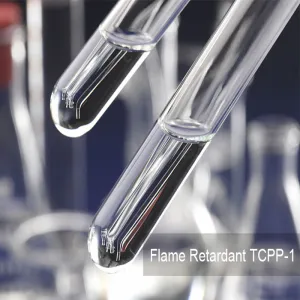
Flame Retardant TCPP
Category: TCPPBrowse number: 93473Number:Release time: 2019-01-01 17:48:29Flame Retardant TCPP Technical IndexAppearance: Colorless to yellowish transparent liquidColor (Pt-Co): ≤30#Specific gravity (20℃): 1.285-1.295Acid content (mgKOH/g): ≤0.10Water content (%): ≤0.10Viscosity (mPa·s/25℃):60-70Phosphorus content (%):9.0-9.8Chlorine content (%):31.9-32.9Performance and PurposeThis product is colorless to pale yellow oily liquid, soluble in benzene, alcohol, ester and carbon tetrachloride. At 20℃, its aquatic solubility is 1.6g/L. This product is insoluble in aliphatic hydrocarbons. Chlorine content is 32.5%, and phosphorus content is 9.5%. As the molecule contai... -
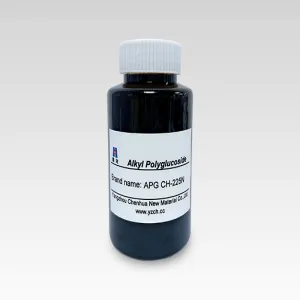
Alkyl Polyglucoside / APG CH-225N
Category: APGCH-0810Browse number: 10196Number:Release time: 2025-03-05 07:04:57ItemAPG CH-0810 50APG CH-0810 70APG CH-225NINCI NameCaprylyl/CaprylGlucosideCaprylyl/CaprylGlucosideCaprylyl/DecylGlucosideAppearance (25℃)Light yellow liquidLight yellow liquidBrown dark liquidSolid content (%)≥50.068.0-72.068.0-72.0pH value11.5-12.511.5-12.56.0-8.0Free alcohol (%)≤1.0≤1.0≤1.0Sulphated ash (%)≤3.0≤4.0≤4.0Viscosity mPa.s(20℃)≥100≥3500≥3500Applications and characteristics:ALKYL POLYGLUCOSIDE APG CH-0810 is made from green and renewable plant materials, with low irritation to skin, good compatibility, without side effect.The foam is rich and delicate, with good stability and emu...
News
Category:
-
[Industry News]What are the advantages of alkyl glycoside detergents?
2024-12-03 07:51:36
Case
Category:
No search results found!
Video
Category:
No search results found!
Download
Category:
No search results found!
Job
Category:
No search results found!
Featured Products
-
NEWS
Flame Retardant TCPP
Learn more -
NEWS
Alkyl Polyglucoside / APG CH-225N
Learn more



 Phone
Phone