
 Español
 Portugues
 Pусский
 Français
 Deutsch
 日本語
日本語 한국어
한국어 العربية
 Italiano
 Nederlands
 Ελληνικά
 Polski
 ไทย
ไทย Tiếng Việt
 українська
 中文简体
中文简体

Flame Retardant TCPP
Tris(1-chloro-2-propyl) phosphate (TCPP) is a widely used halogen‑containing organophosphorus flame retardant. It is mainly applied in polyurethane foams, coatings, adhesives, sealants, and certain plastics to improve fire safety by reducing flammability and slowing the spread of flames. TCPP is particularly common in flexible and rigid polyurethane foam used for furniture, mattresses, insulation panels, and construction materials where fire performance is a key requirement.As an additive flame retardant, TCPP is physically blended into polymer matrices rather than chemically bonded. This allows flexibility in processing and formulation but also means it can gradually migrate out of materials over time. It functions through both gas‑phase and condensed‑phase mechanisms. In the gas phase, TCPP decomposes under heat to release phosphorus‑containing radicals that interfere with the combustion chain reactions, thereby reducing flame intensity. In the condensed phase, it promotes the formation of a protective char layer on the material surface, which acts as a barrier to heat and oxygen.TCPP is a colorless to pale yellow viscous liquid with relatively low volatility, good compatibility with many polymer systems, and favorable processing characteristics. It dissolves well in organic solvents and can be easily incorporated into foam formulations during production. Its thermal stability is high enough to withstand typical polymer processing temperatures, which contributes to its broad industrial use. TCPP is often selected because it offers an effective balance of flame retardancy, cost, and processing ease compared with some alternative systems.In building and construction applications, TCPP‑containing foams contribute to meeting fire safety standards for insulation and sandwich panels, helping to limit fire growth and improve evacuation time in case of a fire. In furniture and bedding, TCPP is used to help products meet flammability regulations that aim to reduce ignition risk from open flames or smoldering sources. It can also be used in engineering plastics, cable compounds, and coatings where moderate to high flame resistance is required.Regulatory and environmental aspects of TCPP are receiving increasing attention. Because it is an additive flame retardant, it can be released to indoor and outdoor environments via material wear, dust, and emissions during its life cycle. TCPP has been detected in indoor air, house dust, and various environmental compartments. Toxicological evaluations have examined potential effects on human health and ecosystems, including concerns about persistence and bioaccumulation. As a result, some regions have introduced restrictions or specific guidelines for its use, exposure, and waste management.To address these concerns, ongoing research focuses on optimizing formulations, improving material encapsulation, and developing alternative flame retardant systems with lower environmental impact. Nonetheless, TCPP remains an important flame retardant in many sectors, providing an effective means to enhance fire safety performance in polymer‑based products while regulatory frameworks and technological innovations continue to evolve.
Products
Category:
TCPP
-
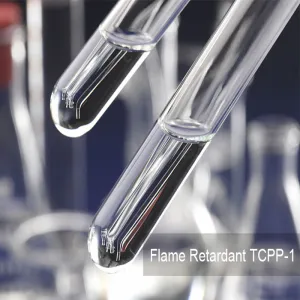
Flame Retardant TCPP
Category: TCPPBrowse number: 93474Number:Release time: 2019-01-01 17:48:29Flame Retardant TCPP Technical IndexAppearance: Colorless to yellowish transparent liquidColor (Pt-Co): ≤30#Specific gravity (20℃): 1.285-1.295Acid content (mgKOH/g): ≤0.10Water content (%): ≤0.10Viscosity (mPa·s/25℃):60-70Phosphorus content (%):9.0-9.8Chlorine content (%):31.9-32.9Performance and PurposeThis product is colorless to pale yellow oily liquid, soluble in benzene, alcohol, ester and carbon tetrachloride. At 20℃, its aquatic solubility is 1.6g/L. This product is insoluble in aliphatic hydrocarbons. Chlorine content is 32.5%, and phosphorus content is 9.5%. As the molecule contai...
News
Category:
-
[Industry News]Most flame retardants achieve their flame retardant purposes...
2019-10-13 19:42:18 -
[Industry News]Environmental flame retardants play three main roles in fire
2019-11-04 05:28:12 -
[Industry News]Multifunction should be the common development direction of...
2019-11-17 16:48:51 -
[Industry News]What is the difference between the processing cost of flame...
2020-04-24 19:29:37 -
[Industry News]PP plastic flame retardant is made of imported materials
2020-04-26 19:32:59 -
[Industry News]Organophosphorus flame retardants will gradually replace bro...
2020-07-15 00:30:05 -
[Industry News]Halogen free flame retardant can meet the requirements of al...
2020-07-26 22:59:47 -
[Industry News]Flame retardant should be commonly used on fabrics that can...
2020-07-29 00:26:36 -
[Industry News]The loss of physical and mechanical properties of barrier fu...
2021-10-26 00:38:03 -
[Industry News]It is often necessary to modify magnesium hydroxide flame re...
2022-11-02 01:24:51 -
[Industry News]The research and application of flame retardants are moving...
2022-11-27 17:59:18 -
[Industry News]The Unexplored Potential of Conductive Silicone Rubber in El...
2024-07-25 00:54:38
Case
Category:
No search results found!
Video
Category:
No search results found!
Download
Category:
No search results found!
Job
Category:
No search results found!
Featured Products
-
NEWS
Flame Retardant TCPP
Learn more



 Phone
Phone